Why Teams Look Beyond Reflectiz
Security and compliance leaders evaluating Reflectiz often run into the same issues.
If your goal is to cut eSkimming risk, simplify PCI DSS 4.0.1, and protect more than just card data, you need runtime control over script behavior, not another monitoring view.

Visibility without full control.
Monitoring shows you which scripts are present, but it does not actively control what those scripts can read, write, or send in real time.
Alert and approval fatigue.
Smart approvals still leave your team reviewing script changes, chasing risk scores, and closing tickets before the next audit.
PCI DSS 4.0.1 expects more than a dashboard.
Requirements 6.4.3 and 11.6.1 call for preventing unauthorized scripts and detecting tampering across the payment flow, not just listing scripts and headers.
Manual work that does not scale.
Large commerce sites struggle to keep up with constantly changing third and fourth party scripts when inventories and approvals are heavily manual.
What our clients are saying
Source Defense vs Reflectiz at a glance
 Primary focus: Behavior based runtime protection in the browser
Control over scripts: Controls what scripts can read, write, and send in real time
PCI DSS 4.0.1 support: Evidence grade reporting plus real time enforcement for 6.4.3 and 11.6.1
Operational impact: Policy driven automation with minimal monthly effort
Data coverage: Card data, credentials, PII, and other sensitive web data
Outcome: Reduced eSkimming risk and faster, more defensible PCI DSS 4.0.1 compliance
Primary focus: Behavior based runtime protection in the browser
Control over scripts: Controls what scripts can read, write, and send in real time
PCI DSS 4.0.1 support: Evidence grade reporting plus real time enforcement for 6.4.3 and 11.6.1
Operational impact: Policy driven automation with minimal monthly effort
Data coverage: Card data, credentials, PII, and other sensitive web data
Outcome: Reduced eSkimming risk and faster, more defensible PCI DSS 4.0.1 compliance
How Source Defense is Different

Real time behavior based protection
Source Defense runs in the browser and controls script behavior as it happens.
- Isolates third and fourth party scripts from sensitive fields
- Redacts keystrokes so keyloggers and skimmers see only masked values
- Blocks unauthorized scripts from executing at all
- Enforces least privilege policies across the entire payment flow
Instead of only seeing that a risky script exists, you decide exactly what it is allowed to do and Source Defense applies that policy in real time.
Less manual work, more automation
Reflectiz helps you see and review activity. Source Defense goes further and automates protection and reporting so your teams are not buried in approvals and tickets.
- Policy driven protection instead of one off decisions
- Automatic logging and evidence generation for assessments
- Minimal operational effort once policies are tuned
Your teams spend more time improving security and less time chasing script changes.
Purpose built for PCI DSS 4.0.1
Source Defense was designed to address the client side requirements in PCI DSS 4.0.1 and the eSkimming problem behind them. You get:
- A complete inventory of first, third, and fourth party scripts across payment pages
- Business justification, approvals, and risk ratings for each script
- Continuous change and tamper detection on scripts and security impacting headers
- Evidence grade reports mapped directly to 6.4.3 and 11.6.1 for QSAs and internal audit
This turns PCI DSS 4.0.1 from a manual scripting project into an ongoing, automated control.
Protection beyond card data
Cardholder data is only part of the exposure on modern sites. Source Defense policies also monitor and control script behaviors that touch:
- Customer credentials and account data
- PII and contact information in web forms
- Health, financial, and other regulated data collected in the browser
You support PCI DSS, privacy requirements, and sector specific regulations with a single client side control.
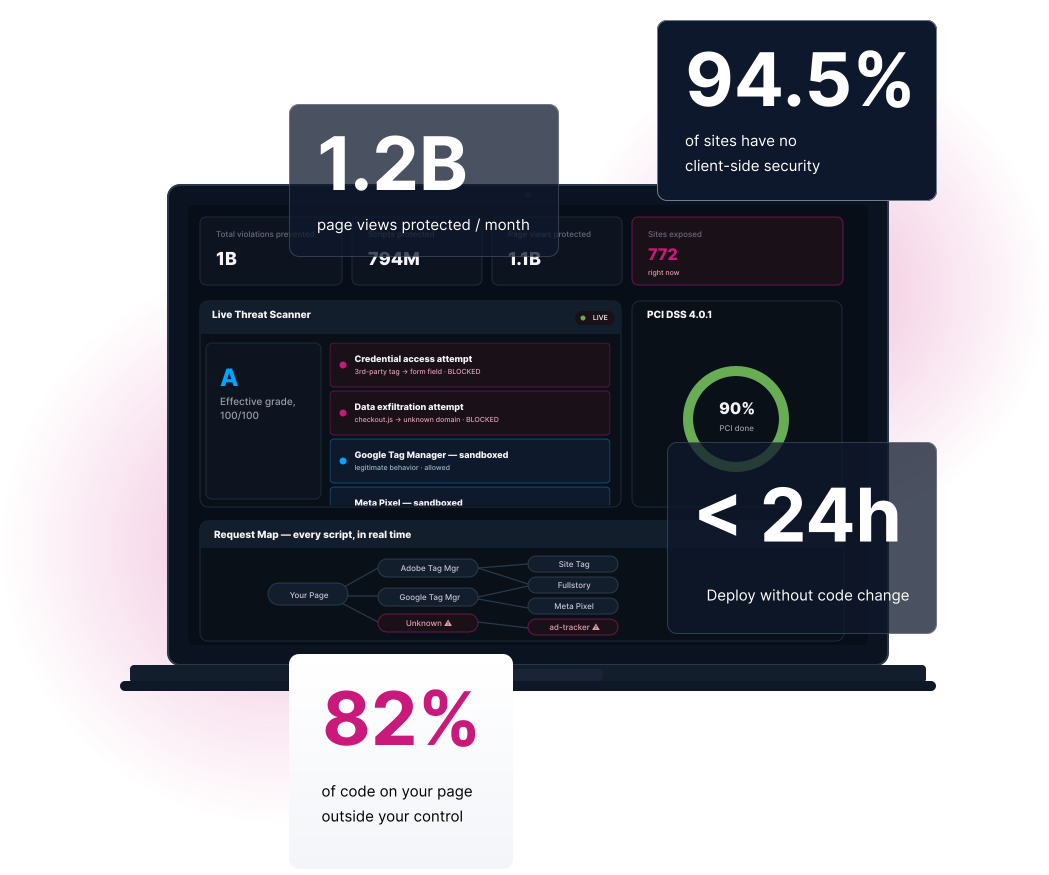
What To Expect In The First 30 Days
Source Defense uses a defined onboarding process that moves from discovery to full protection in less than a month.
You can expect:
- Automatic discovery and scoping of all scripts across your payment flows
- A custom PCI dashboard with live findings
- Recommended behavioral policies for each script
- Quick deployment and validation
- QSA ready reporting for 6.4.3 and 11.6.1
Many customers complete this cycle in under 30 days.